




Shu-Te University Diploma: Degree Certificate, Transcript and Academic Credential Overview
A Shu-Te University Diploma represents an academic credential issued under the university-level education system of Taiwan. Shu-Te University, located in Kaohsiung, developed from an applied and technology-oriented institution into a recognized university of science and technology, with its official university name approved in 2000. Its academic identity is closely connected with practical learning, design thinking, management training, information technology, applied social sciences and interdisciplinary professional education

The value of a Shu-Te University Diploma is not limited to the graduation certificate itself. A complete academic credential normally includes the diploma, degree certificate, official transcript, department record, graduation date, degree level and verification details. Together, these documents form a complete academic profile that can be used for employment background review, further academic evaluation, professional qualification assessment and international document checking
| Credential Document | Main Details Displayed | Function of the Document |
|---|---|---|
| Diploma / Graduation Certificate | University name, graduate name, department, degree level, conferral date and official issuing elements | Confirms completion of an approved academic program |
| Degree Certificate | Bachelor’s, Master’s or Doctoral degree title and academic field | Shows the formal academic level awarded |
| Official Transcript | Course names, credits, grades, semesters and academic performance records | Provides detailed proof of study history |
| Enrollment / Graduation Record | Student status, study period, college, department and completion information | Supports identity and timeline verification |
| Certified Copy / Verification File | Certified reproduction or confirmation of academic records | Used for institutional, employer or overseas review |
Shu-Te University’s academic structure covers several applied fields. Its colleges and departments are commonly associated with Management, Design, Informatics, Applied Social Science and Liberal Education. Representative areas include Business Administration, Information Management, Computer Science and Information Engineering, Applied Foreign Languages, Interior Design, Visual Communication Design, Animation and Game Design, Fashion Design, Product Design, Child Care, Social Work, Human Sexuality, Leisure and Recreation, Hospitality, Marketing, Finance-related studies and other technology or service-oriented programs. Because each department carries its own academic identity, the wording shown on a Shu-Te University Diploma may vary according to degree level, faculty, department and year of issue
| Academic Area | Typical Credential Focus |
|---|---|
| Design and Creative Studies | Portfolio-based, visual, spatial, product and digital design records |
| Management and Business | Business, marketing, administration and service management records |
| Informatics and Technology | Computing, information systems and digital technology records |
| Applied Social Science | Social service, human development and community-related study records |
| Liberal and General Education | Foundational education and cross-disciplinary academic support |
A Shu-Te University Diploma may correspond to different degree levels. A bachelor’s degree certificate generally confirms completion of undergraduate study. A master’s degree certificate reflects advanced academic or professional training, often supported by specialized coursework, project work or research. A doctoral credential represents the highest level of academic recognition and is normally linked with independent research capability. In Taiwan’s higher-education framework, undergraduate study is generally structured around four years, master’s programs commonly range from one to four years, and doctoral programs may extend from two to seven years depending on academic requirements
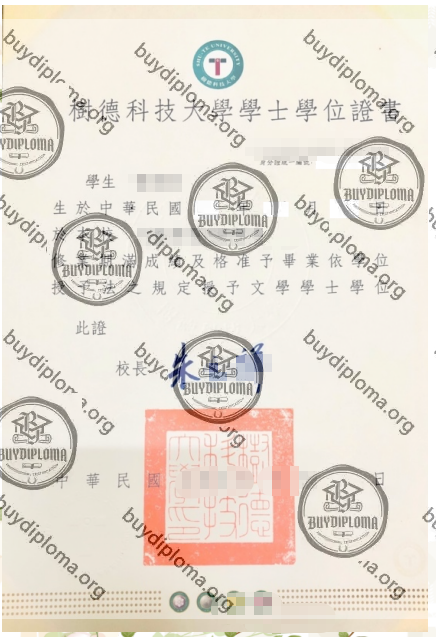
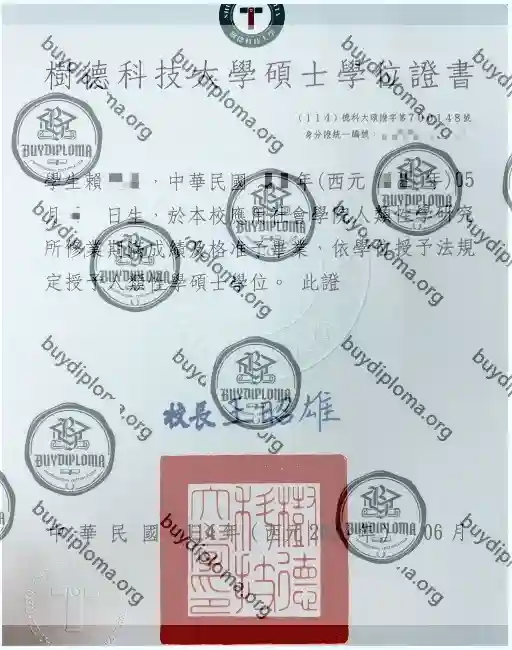
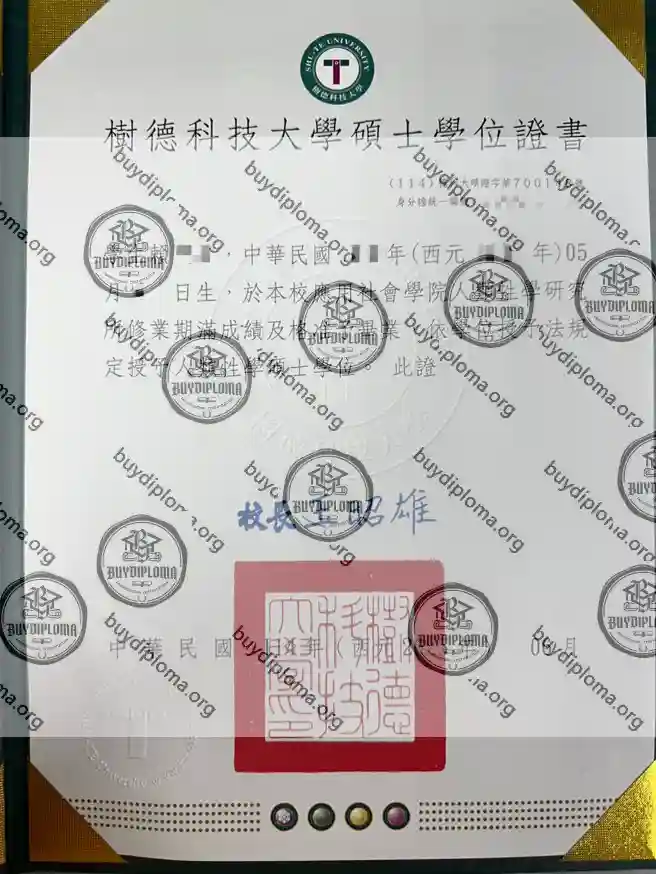
From a document-design perspective, the diploma is usually formal, clean and institution-centered. It is expected to present the university name clearly, followed by the graduate’s name, department, degree title and official date of graduation or degree conferral. The visual style of a degree certificate normally emphasizes authority, balance and readability rather than decoration. Official seals, signatures, registration marks or certification elements may appear according to the issuing format and year. The transcript is more analytical: it records the academic path behind the certificate, including courses, grades, credits and semester structure
The recognition value of a Shu-Te University Diploma is strengthened when the diploma and transcript match perfectly. Names, dates, department titles, degree level and course records should remain consistent across all documents. For international review, the strongest file usually includes the diploma, official transcript, certified copy and, where necessary, an accurate English or Chinese translation. A single certificate can confirm graduation, but the transcript explains the depth, structure and performance of the academic record
Within Taiwan’s higher-education environment, university credentials are supported by a broad national system of universities, colleges, technical institutions and graduate programs. Public education data show that Taiwan has a mature higher-education structure with bachelor’s, master’s and doctoral pathways, and university faculty qualifications are strongly supported by doctoral-level academic staffing. This wider environment adds institutional context to the Shu-Te University Diploma and helps explain why degree certificates, transcripts and verification records are often reviewed together
In summary, a Shu-Te University Diploma is best understood as part of a complete credential set: the diploma confirms the award, the degree certificate defines the academic level, and the transcript provides the detailed academic evidence. Its practical value depends on clarity, consistency, official issuance and the strength of the supporting academic record


